
Download the worksheet
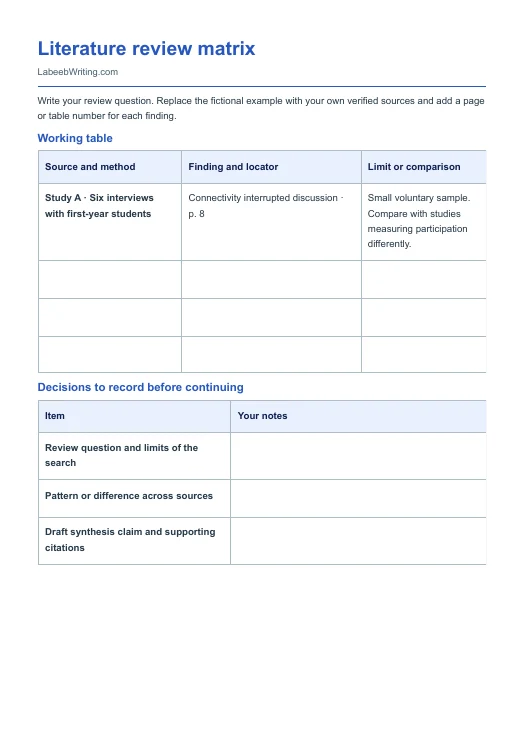
Literature review matrix
Compare study findings, methods and limits, then draft a claim from the evidence.
Turn the question into comparison criteria
For the fictional question “What limits participation in hybrid tutorials?”, compare how each study defines participation, who took part and what the method can establish. A general note such as “this study was useful” gives you little to compare later.
Record findings at the level of the original study
- Source A · Six interviews with first-year students. Learners report that unreliable internet interrupts discussions. Locator p. 8. Limitation: a small, self-selected group.
- Source B · A survey of 124 students. Confidence and prior familiarity are associated with self-reported participation. Locator Table 2. Limitation: cross-sectional and self-reported.
- Source C · Observation of four tutorials. Quiet students contributed through chat. Locator p. 11. Limitation: one course and four sessions.
Draft a claim the evidence can support
A defensible synthesis is that participation barriers differ with how participation is measured. Interviews highlight access barriers, the survey links confidence to reported engagement, and classroom observations show that a student who rarely speaks may still contribute in writing. A causal claim would require a design that addresses alternative explanations. Add the relevant citations to the claims they support.
Keep search and verification notes
Record the database, date, terms and filters so you can retrace the search. Use your programme’s method for any formal review, including decisions about screening and quality. In the matrix, leave uncertain page numbers or reference details flagged until you see the source.
Separate evidence that can answer different questions
In this example the interview explains why some students report being unable to contribute. The survey describes an association with self-reported engagement. The classroom observation describes behaviour visible in four sessions. Use three source rows even though all papers use the word participation. A combined average or a causal ranking would erase the difference between what was measured.
Write a short label for each recurring theme before grouping sources. “Access” can include connectivity or device availability. “Forms of participation” can include speaking and text chat. If one source offers a different finding for another theme, add a second row, use the same short reference, and use a locator that leads to the new evidence.
Turn a theme into a defensible paragraph
- Lead with a narrow claim. In the fictional example, estimates of participation depend in part on whether the study counts speech, written chat or self-report.
- Explain the evidence in relation to that claim. Pair the observed chat contributions with the survey’s self-reports and identify the measurement difference. Use the interview finding to explain a possible access barrier.
- Name the boundary. The findings concern first-year students in the example contexts. Reserve predictions about changing an attendance rule for evidence that evaluates that change.
- Keep the unresolved question specific. Additional evidence comparing the same cohorts and measures would help separate access barriers from differences in how participation was defined.
Decide what to verify before using a row
Open the study at the locator and read the results with the method. Check the unit of analysis, who was included, and any important exclusions. Then separate the authors’ own interpretation from your explanation of why the studies differ. Add the precise citation using the citation tool after verifying the source.
If the matrix is part of a systematic or scoping review, use the protocol, screening process and quality criteria your project requires. This comparison records evidence and observations from the studies you entered. Keep the formal search and eligibility decisions in the review records your programme expects.
Sources
Frequently asked questions
Should the review include every paper I find?
Use your question and agreed scope to decide what belongs. Keep a record of exclusions where your research design or programme asks for one.